 |
|
|
|
 |
Senior Member
|
|
Posts: 11,953
Join Date: Oct 2006
Location: BAHRAIN
|
|
|
GLOBAL ASTRONOMY MONTH - APRIL 2010 -
04-18-2010, 11:48 PM
GLOBAL ASTRONOMY MONTH - APRIL 2010
අන්තර්ජාතිත තාරකාවිද්යා මාසය
අපේ එළකිරි සමාජයේ සිටින තාරකා විද්යා හදාරන සහ ඒ සම්බන්දව දැනුමක් තියෙන හෙමොටම මෙන්න හොද අවස්තාවක්.
තාරකා විද්යා
මෙම මතෘකාවට අදල ලිපි, පින්තූර,විඩියො දර්ශණ . . .මගින් අපෙ අනෙකුත් සමජිකයන් සමග දැනුම බෙදාගමු.
Last edited by hemalsilva; 04-19-2010 at 01:04 AM.
|
 |
Senior Member
|
|
Posts: 11,953
Join Date: Oct 2006
Location: BAHRAIN
|
|
|
අහස නිරීක්ෂණය කිරීමේ මූලික ක්රම -
04-18-2010, 11:55 PM
Last edited by hemalsilva; 04-19-2010 at 01:32 AM.
|
 |
Senior Member
|
|
Posts: 11,953
Join Date: Oct 2006
Location: BAHRAIN
|
|
|
04-18-2010, 11:57 PM
අහස නිරීක්ෂණය කිරීමේ මූලික ක්රම
ලියන ලද්දේ ඊ.ඩී.ආර්. සුදර්ශන ahasa.net
Wide-angle photo shows the constellation Scorpius in which the black-hole system GRO J1655-40 is found. On the right is a 4-degree zoom on the area with the black hole. This insert comes from the Digitized Sky Survey II.
Credit: Akira Fujii & Digitized Sky Survey

Last edited by hemalsilva; 04-19-2010 at 01:38 AM.
|
 |
Senior Member
|
|
Posts: 11,953
Join Date: Oct 2006
Location: BAHRAIN
|
|
|
04-19-2010, 12:00 AM
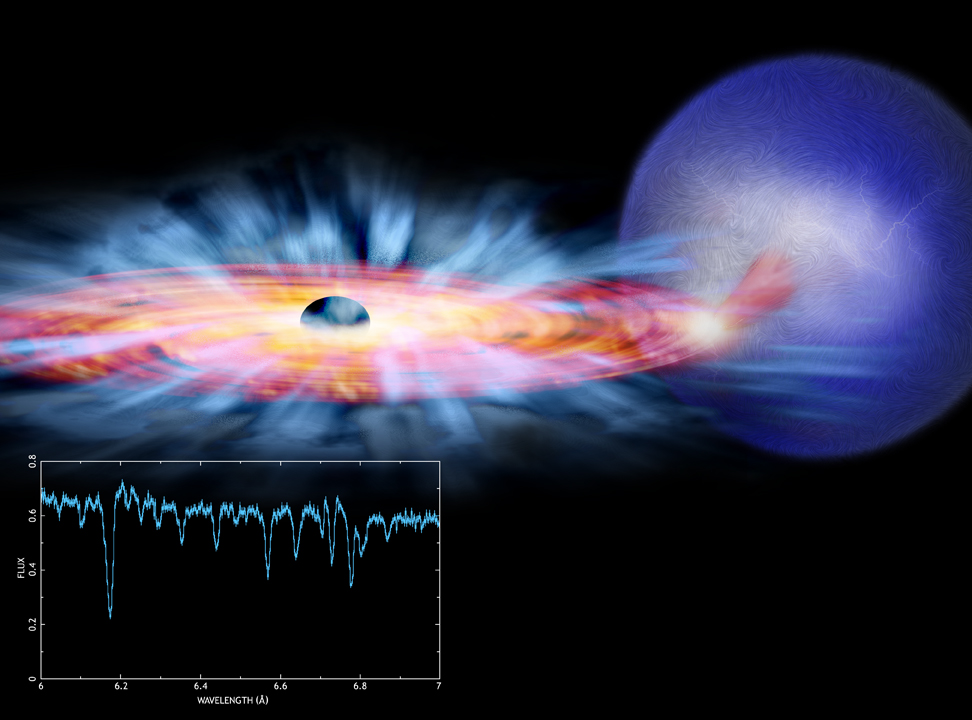
NASA's Chandra Answers Black Hole Paradox

he X-ray spectrum (see inset) of a binary star system consisting of a black hole and a normal star indicates that turbulent winds of multimillion degree gas are swirling around the black hole. As the illustration shows, much of the hot gas is spiraling inward toward the black hole, but about 30% is blowing away.
The temperature and intensity of the winds imply that powerful magnetic fields must be present. These magnetic fields, likely carried by the gas flowing from the companion star, create magnetic turbulence that generates friction in the gaseous disk and drive winds from the disk that carry momentum outward as the gas falls inward. Magnetic friction also heats the gas in the inner part of the disk to X-ray emitting temperatures.
The analysis of the disk wind of GRO J1655-40, or J1655 for short, confirmed what astronomers had long suspected, namely that magnetic friction is central to understanding how black holes accrete matter rapidly. Without a process to take away some of the angular momentum of the gas, it could remain in orbit around a black hole for a very long time.
J1655 is a binary system that harbors a black hole with a mass seven times that of the sun, which is pulling matter from a normal star about twice as massive as the sun. The Chandra observation revealed a bright X-ray source whose spectrum showed dips produced by absorption from a wide variety of atoms ranging from oxygen to nickel. A detailed study of these absorption features shows that the atoms are highly ionized and are moving away from the black hole in a high-speed wind.
Understanding the importance of magnetic forces in the disk of gas around J1655 could have far-reaching implications, from the supermassive black holes associated with powerful quasars, to planet-forming disks around young sun-like stars.
|
 |
Senior Member
|
|
Posts: 11,953
Join Date: Oct 2006
Location: BAHRAIN
|
|
|
ට්රයිටන් -
04-19-2010, 12:35 AM
ට්රයිටන්
1846 ඔක්තෝබර් මාසයේදී විලියම් ලසෙල් එකල අළුතින් සොයාගන්නා ලද නෙප්ටූන් ග්රහයා නිරීක්ෂණය කරමින් සිටියේ ය. ඔහුට අවශ්ය වූයේ නෙප්ටූන් සතුව වළලු පද්ධතියක් ඇතිබව වටහා ගැනීමට යි. නමුත් එවර නෙප්ටූන් සතුව චන්ද්රයෙක්ද ඇතිබව ඔහු සොයාගත්තේ ය. නෙප්ටූන්ගේ වළලු පද්ධතිය ඔහුගේ දුරේක්ෂයේ තිබූ දුර්වලතාවයක් නිසා හටගත්තක් බව ඔහු පසුව පැහැදිලි කලේ ය. මෙම ට්රයිටන්ගේ ඡායාරූපය 1989දී වොයෙජර් 2 යානය විසින් ලබාගත්තකි. ට්රයිටන් සතුව ඉතා තුනී වායුගෝලයක් සහ අයිස් ගිණිකඳු සතු බවත් එය සොයාගත්තේ ය. නමුත් පුදුම දනවන කරුණක් වන්නේ නෙප්ටූන් සතු ඉතා තුනී වළලු පද්ධතියක්ද වොයෙජර් යානය විසින් සොයාගැනීමයි. මෙය ලසෙල්ට නම් කිසිසේත්ම දර්ශණය වන්නට ඉඩක් නැත.
උපුටා ගැනීම skylk
|
 |
Senior Member
|
|
Posts: 11,953
Join Date: Oct 2006
Location: BAHRAIN
|
|
|
හෙලික්ස් නිහාරිකාව -
04-19-2010, 12:38 AM
හෙලික්ස් නිහාරිකාව
අපගේ සූර්යයාත් කෙදිනක හෝ මෙලෙස දිස්වේවි ද? හෙලික්ස් නිහාරිකාව ග්රහලෝකමය නිහාරිකාවක් සඳහා අපට සමීපතම සහ දීප්තිමත්ම උදාහරණයකි. අප සූර්යයා වැනි තරුවක් සුපර්නෝවා පිපිරුමකට බඳුන් වූ පසුව මෙවැන්නක් සිදුවේ. NGC 7293 ලෙසද හඳුන්වන හෙලික්ස් නිහාරිකාව ආ.ව. 700ක් ඈතින් ඇක්වේරිස් (කුම්භ) රාශිය පසුබිම් කරගනිමින් පිහිටයි. එහි පළල ආ.ව. 2.5ක් පමණ වේ.
උපුටා ගැනීම skylk
|
 |
Senior Member
|
|
Posts: 11,953
Join Date: Oct 2006
Location: BAHRAIN
|
|
|
හෝ(ල්)ම්ස් ධූම -
04-19-2010, 12:42 AM
හෝ(ල්)ම්ස් ධූම
අංශක 10ක් පුරා විහිදෙන මෙම ඡායාරූපය පර්සියස් රාශියේ එක්තරා කොටසකි. ඡායාරූපයට නිහාරිකා, තරු පොකුරු සහ විශේෂයෙන්ම හෝ(ල්)ම්ස් ධූමකේතුවද අයත් ය. ඡායාරූපය ගන්නා අවස්ථාවේ හෝ(ල්)ම්ස් ධූමකේතුව ආ.මි. 14ක් ඈතින් පිහිටියද මෙම ඡායාරූපය තුල දීප්තිමත්ම තරුව වන ඇල්ෆා පර්සියස් තරුවේ දීප්තියට අභිබවා යමින් අහස ඒකාලෝක කරයි.
උපුටා ගැනීම skylk
Last edited by hemalsilva; 04-19-2010 at 01:06 AM.
|
 |
Senior Member
|
|
Posts: 11,953
Join Date: Oct 2006
Location: BAHRAIN
|
|
|
කැට්ස් අයි -
04-19-2010, 12:45 AM
කැට්ස් අයි
කැට්ස් අයි නිහාරිකාව පවතින්නේ පෘථිවියේ සිට ආ.ව. තුන්දහසක් ඈතින් ය. NGC 6543 ලෙසද හැඳින්වෙන මෙය විශ්කම්භයෙන් ආ.ව. භාගයක් පමණ වේ. අප සූර්යයා වන තවත් තරුවක අවසන් භාගය පෙන්නුම් කරන මෙම නිහාරිකාවේ ඡායාරූපය මෑතකදී නැවතත් ප්රතිසංස්කරණය කිරීමෙන් පසුව නැවත වර්ණගන්වන ලදී. මෙවර ඡායාරූපය පෙර ඡායාරූපයට වඩා ඉහළ වර්ණ ප්රමාණයක් පෙන්නුම් කරයි.
උපුටා ගැනීම skylk
|
 |
Senior Member
|
|
Posts: 11,953
Join Date: Oct 2006
Location: BAHRAIN
|
|
|
තාරකා ගමන් මඟ -
04-19-2010, 12:48 AM
තාරකා ගමන් මඟ
2008 සැප්තැම්බරයේදී ප්රංශයේ මොන්ට්ලක්ස් හිදී ලබාගන්න ලද මෙම ඡායාරූපය පැය ගණනාවක් නිරාවරණය කිරීමෙන් ලබාගන්නා ලද්දකි. ඛගෝල සමකය ආසන්න ප්රදේශයේ තරු සරල රේඛා ලෙස ගමන් කරන ආකාරයක් පෙනුනද ධ්රැව ආසන්න තරු වෘත්තාකාර ලෙස ගමන් කරයි. දකුණු පස මධ්යයේ ඔරායන් රාශියද වම් පස සිකුරු ග්රහයාද වම් පස ඉහලට වන්නට ඉරිඩියම් චන්ද්රිකාවක්ද දැකගත හැකි ය. මෙම ඡායාරූපය නිර්මාණය කිරීම සඳහා තප්පර 30 බැගින් අනාවරණය කරල ලද ඩිජිටල් ඡායාරූප 477ක් භාවිතාකර ඇති අතර සම්පූර්ණ අනාවරණ කාලය පැය 4.3කි.
උපුටා ගැනීම skylk
|
 |
Senior Member
|
|
Posts: 11,953
Join Date: Oct 2006
Location: BAHRAIN
|
|
|
M51 හබල් -
04-19-2010, 12:51 AM
M51 හබල්
චාර්ල්ස් මෙසියර් විසින් සකසන ලද සුප්රකට මෙසියර් නාමාවලියේ 51වන වස්තුව වන මෙම සර්පිලාකාර මණ්දාකිණිය NGC 5194 ලෙසද හඳුන්වයි. විශ්කම්භයෙන් ආ.ව. 60,000කට වඩා වැඩි මෙය අසල ඇති තවත් සහයක මණ්දාකිණියක් සමඟ (NGC 5195) ගැටෙමින් පවතී. හබල් දුරේක්ෂය සතු විශේෂ කැමරා මගින් ලබා ගන්න ලද මෙම ඡායාරූපය පරිඝනක භාවිතයෙන් විස්තරාත්මක ලෙස වර්ණවත් කර ඇත.
උපුටා ගැනීම skylk
|
| Thread Tools |
|
|
| Display Modes |
Linear Mode
|
Posting Rules
|
You may not post new threads
You may not post replies
You may not post attachments
You may not edit your posts
HTML code is Off
|
|
|
Copyright © 2006 - 2011 ElaKiri™ Beta2.Evo vBulletin, vBa iBproArcade Subdreamer I-Magic MKv
Optimisation plugin by
DBtech
|